What soft washing is, and when to use it
Soft washing cleans with chemistry and time instead of force. It's the safe way to wash siding and roofs.
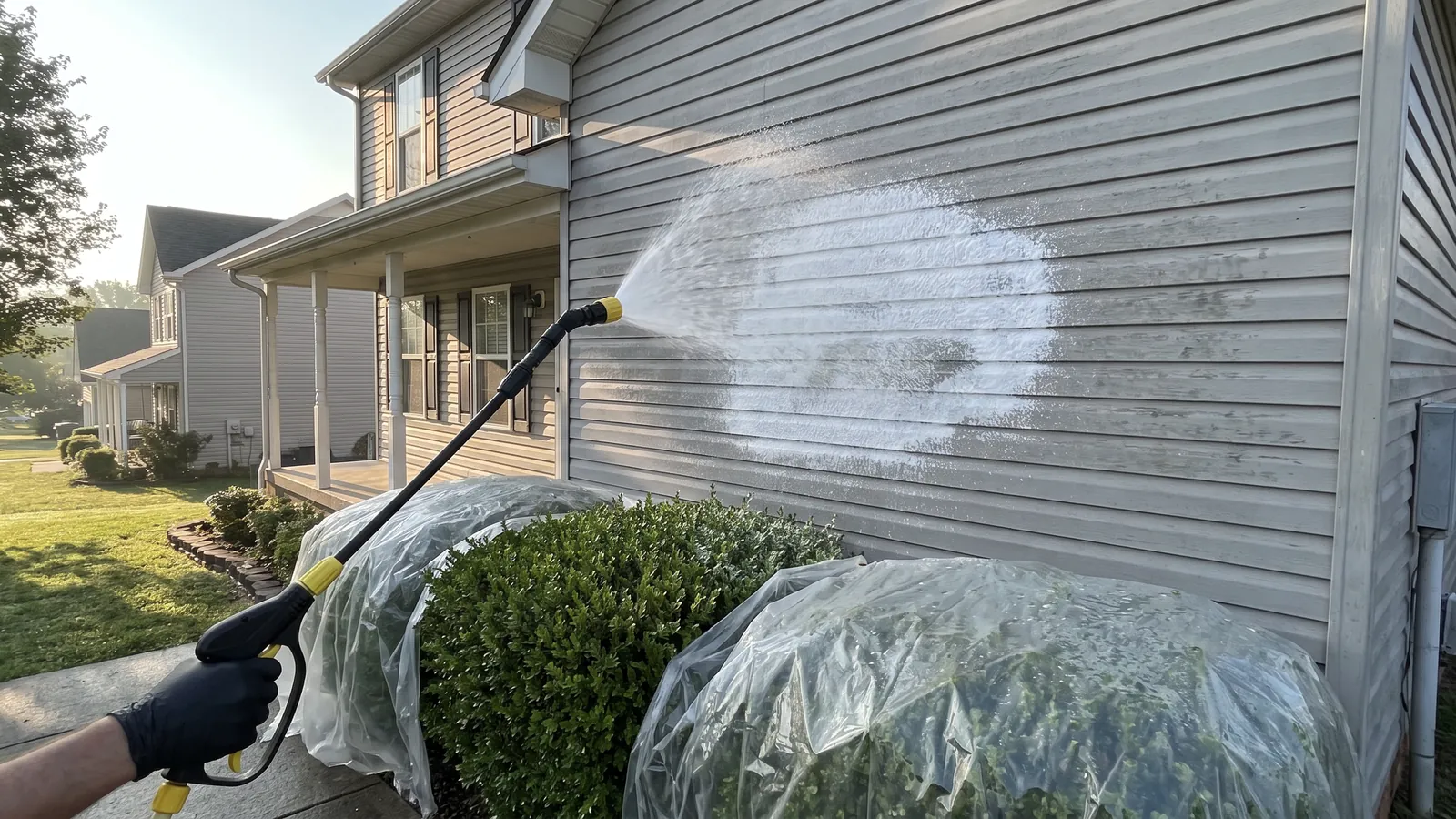
How it works
A soft wash system pumps a cleaning solution at low pressure, often through a hose reel and a wand with a wide fan or a long-range tip for reaching gables. The solution sits on the surface for several minutes, killing algae, mildew, moss and lichen, then it's rinsed off with water at low pressure. The growth comes off because it's dead and loose, not because it was blasted.
What's in the solution
The active ingredient is usually sodium hypochlorite, diluted well below household bleach strength for most surfaces. A surfactant helps it cling to walls. Some mixes add a scent masker. The strength is set by the surface: lighter on painted wood, stronger on a roof with old lichen.
Soft wash vs pressure wash, by surface
| Surface | Method |
|---|---|
| Vinyl siding | Soft wash |
| Asphalt shingles | Soft wash only |
| Stucco and EIFS | Soft wash |
| Painted wood | Soft wash |
| Brick walls | Soft wash or low pressure |
| Concrete flatwork | Pressure wash |
| Wood decks and fences | Low pressure with a wood cleaner |
The plant question
Diluted hypochlorite can burn leaves if it soaks into dry plants. That's why every careful soft wash starts by soaking beds with plain water, covers anything right against the wall, and ends by rinsing the plants again. Done that way, shrubs come through fine.
See it applied on soft washing and roof washing.
Common follow-ups
Is soft washing the same as chemical washing?
Roughly, yes. Soft washing is a chemical clean with a low-pressure rinse. The chemical is diluted and rinsed away.
Can I soft wash my own house?
You can, with a pump sprayer and the right dilution, but mix strength and plant protection are where most DIY attempts go wrong. Start small on a shaded wall.
Does it smell?
There's a mild chlorine smell during the job that fades quickly once everything is rinsed.