Patio cleaning for stone, pavers and stamped concrete
Patios hold shade, leaves and standing water, so they grow moss in every joint. Each material needs its own pressure.
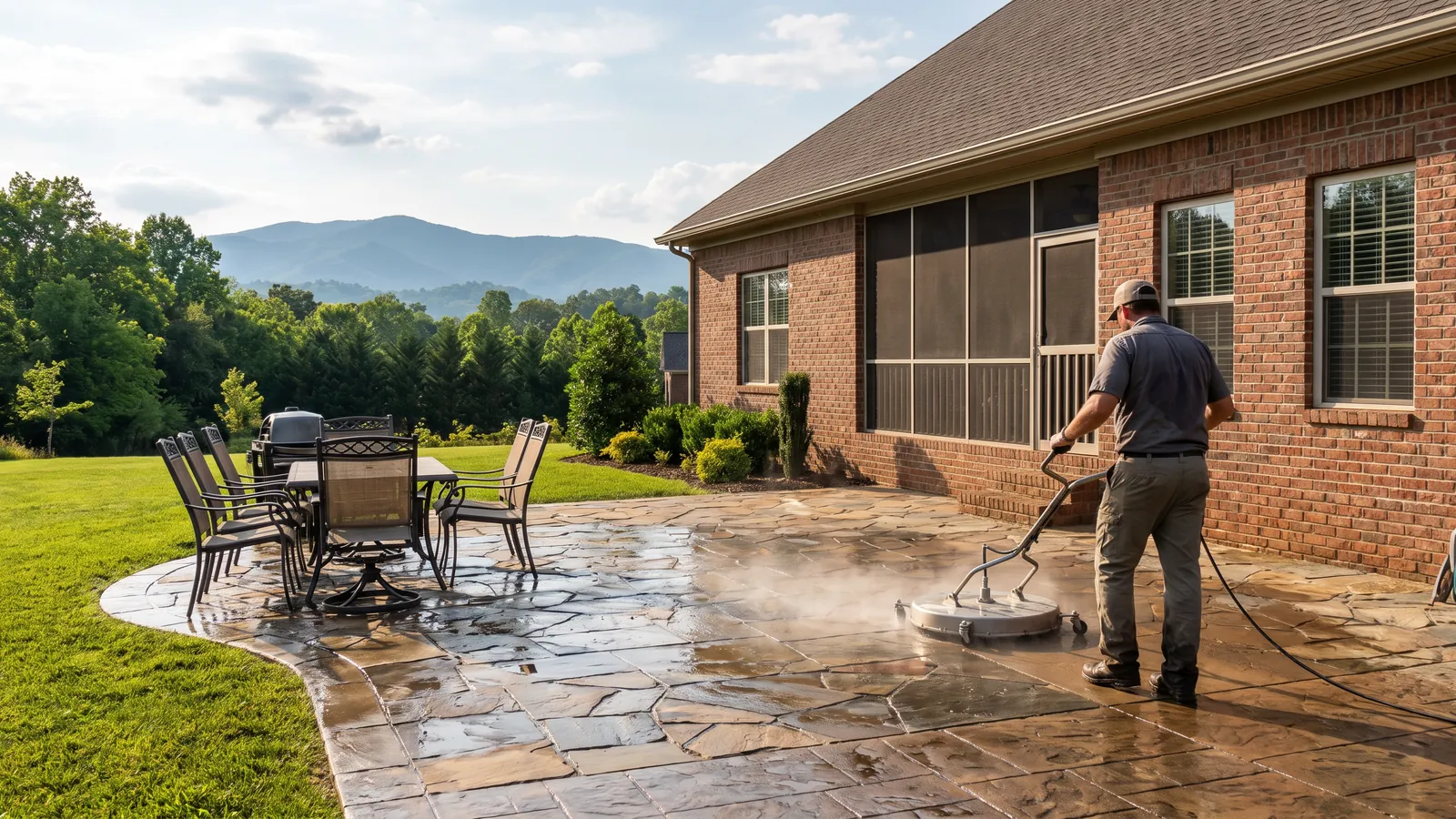
Three patios, three approaches
Flagstone and Crab Orchard stone
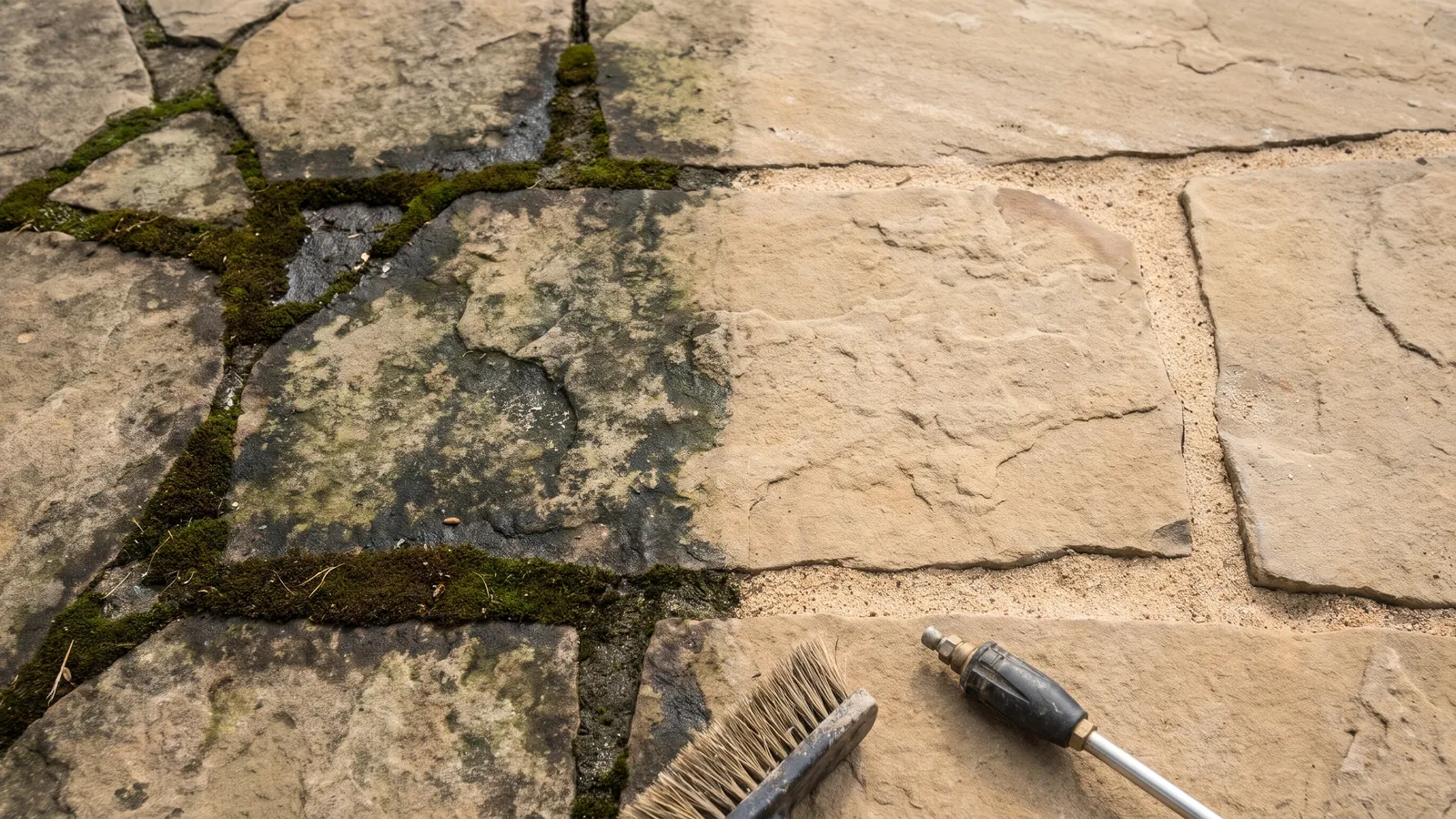
Tennessee's own Crab Orchard sandstone is on a lot of older Knoxville patios. It's a layered stone, so a narrow, close spray can flake the surface. It gets moderate pressure through a surface cleaner, a hand wand at a distance on the joints, and a cleaner where moss has rooted.
Concrete pavers
The surface cleans well. The joint sand doesn't stay put, so expect some to wash out. Re-sanding afterward, with regular or polymeric sand, is a separate step you can ask for or do yourself once the pavers dry.
Stamped and colored concrete
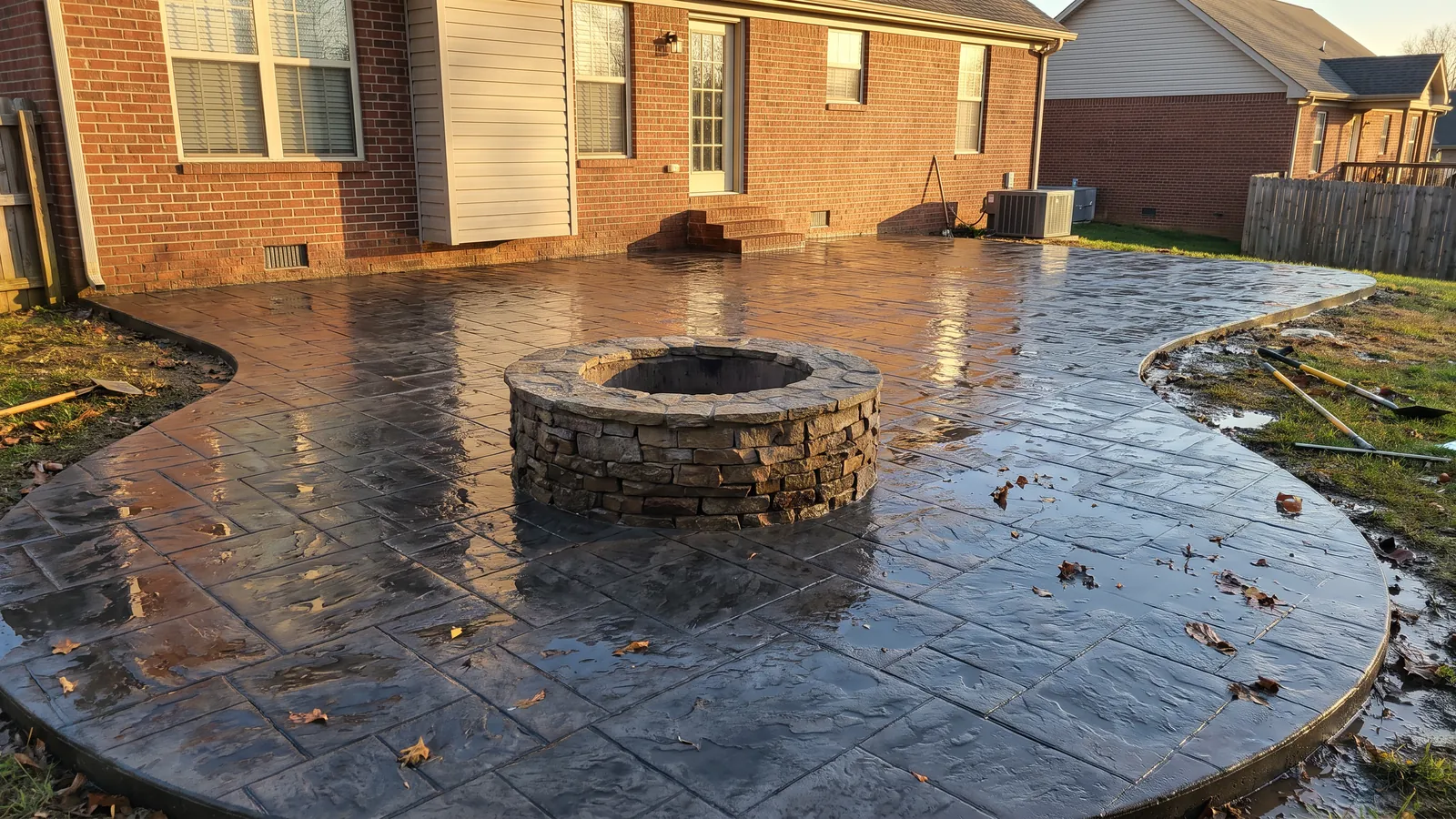
Stamped patios usually have a sealer on top. Too much pressure clouds or strips it, so these get the gentlest concrete wash, and sealing afterward is a common add-on.
Before we get there
- Move cushions, rugs, potted plants and grills off the patio, or we can.
- Close nearby windows and the door to the house.
- Tell us about any loose stones or wobbling pavers so they're not lifted by the spray.
Combining with a deck? Most backyards have both, and they're often done the same morning. See deck cleaning.
Asked about patio cleaning
Still wondering about something? Call (865) 390-6589 and ask. It costs nothing to ask.
Will washing pull the sand out of my pavers?
Some, yes. That's normal. Joints can be re-sanded once the surface is dry, which also helps keep weeds and ants out.
Can you get moss out of the cracks?
Yes. A cleaner applied to the joints kills it at the root, and the wash lifts it out. Shady patios will need it again sooner than sunny ones.
Do you seal patios?
Sealing after washing can be arranged for stamped concrete and pavers. It needs a dry surface and a dry forecast, so it's usually a second visit.