Pressure washing vs power washing
In everyday use the two names mean the same thing. In the trade, one detail separates them: heat.
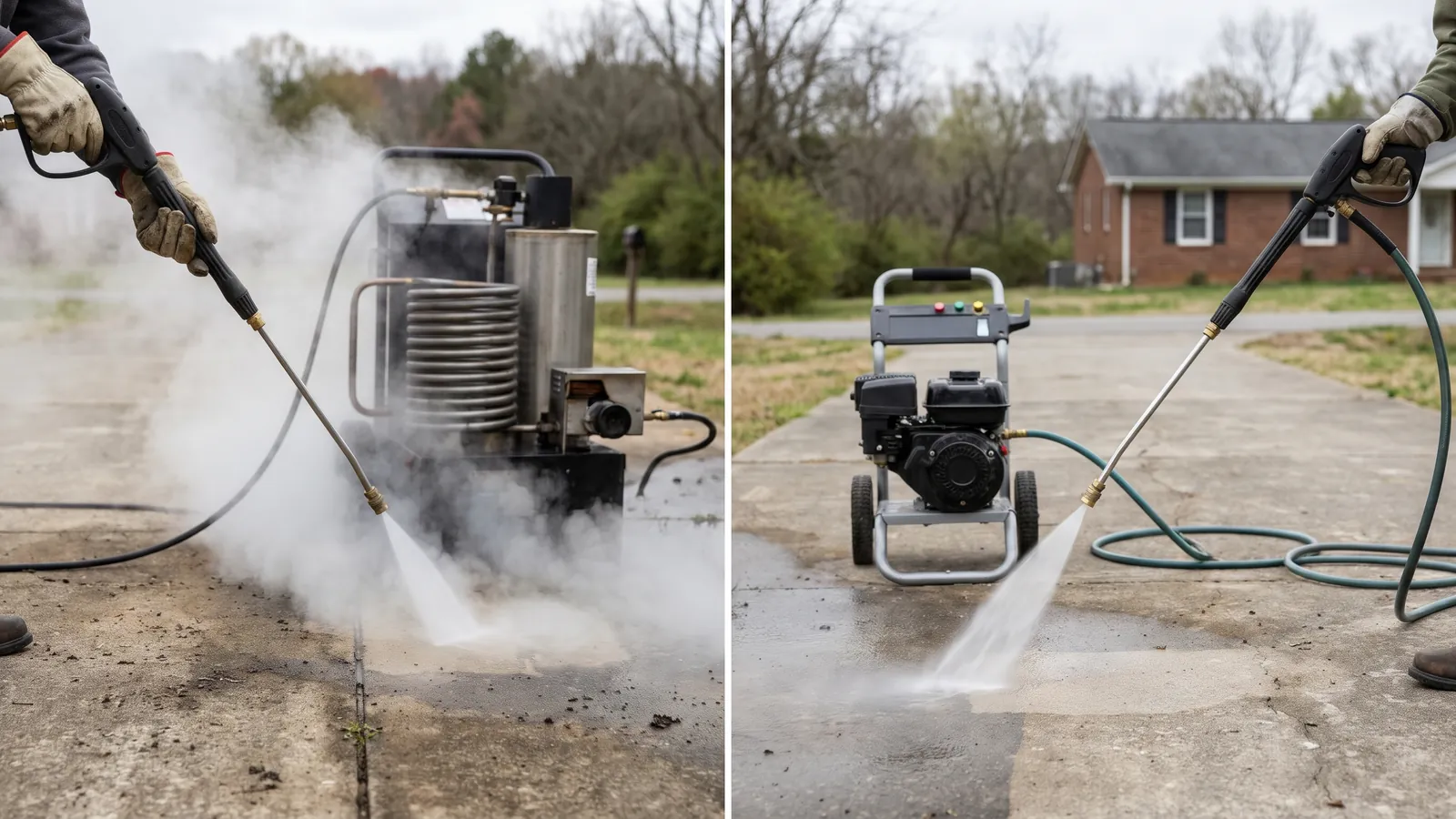
The technical difference
Both machines push water through a pump to make high pressure. A power washer, strictly speaking, also heats the water. Most homeowners and most companies use the two names interchangeably, and if you search for either you'll find the same people. When the difference matters, it's because of grease.
| Cold water (pressure washing) | Hot water (power washing) | |
|---|---|---|
| Best on | Mildew, dirt, pollen, clay | Grease, oil, gum, food waste |
| Typical setting | Homes, driveways, decks | Restaurant pads, garages, fleets |
| Risk on soft surfaces | Moderate | Higher; heat plus pressure |
The third option
Siding and shingle roofs shouldn't get either one. They get a soft wash, which uses barely any pressure at all. That's covered in the soft washing guide.
How to tell which one a job needs
- If it's green or black and growing, cleaner plus low or moderate pressure, cold water.
- If it's oily or sticky, hot water and a degreaser.
- If the surface is painted, vinyl or shingled, soft wash.
Common follow-ups
Is a power washer stronger than a pressure washer?
Not necessarily. Pressure depends on the pump and the tip. Heat is the difference, and it helps with grease more than with dirt.
Do I need hot water for my driveway?
Usually not. Mildew and clay come off with cold water and a surface cleaner. Hot water helps on old oil stains.
Which one should I rent?
For a home, a cold-water unit with a surface cleaner attachment handles most flatwork. Leave siding and roofs alone with it.