Fleet washing at your yard, not ours
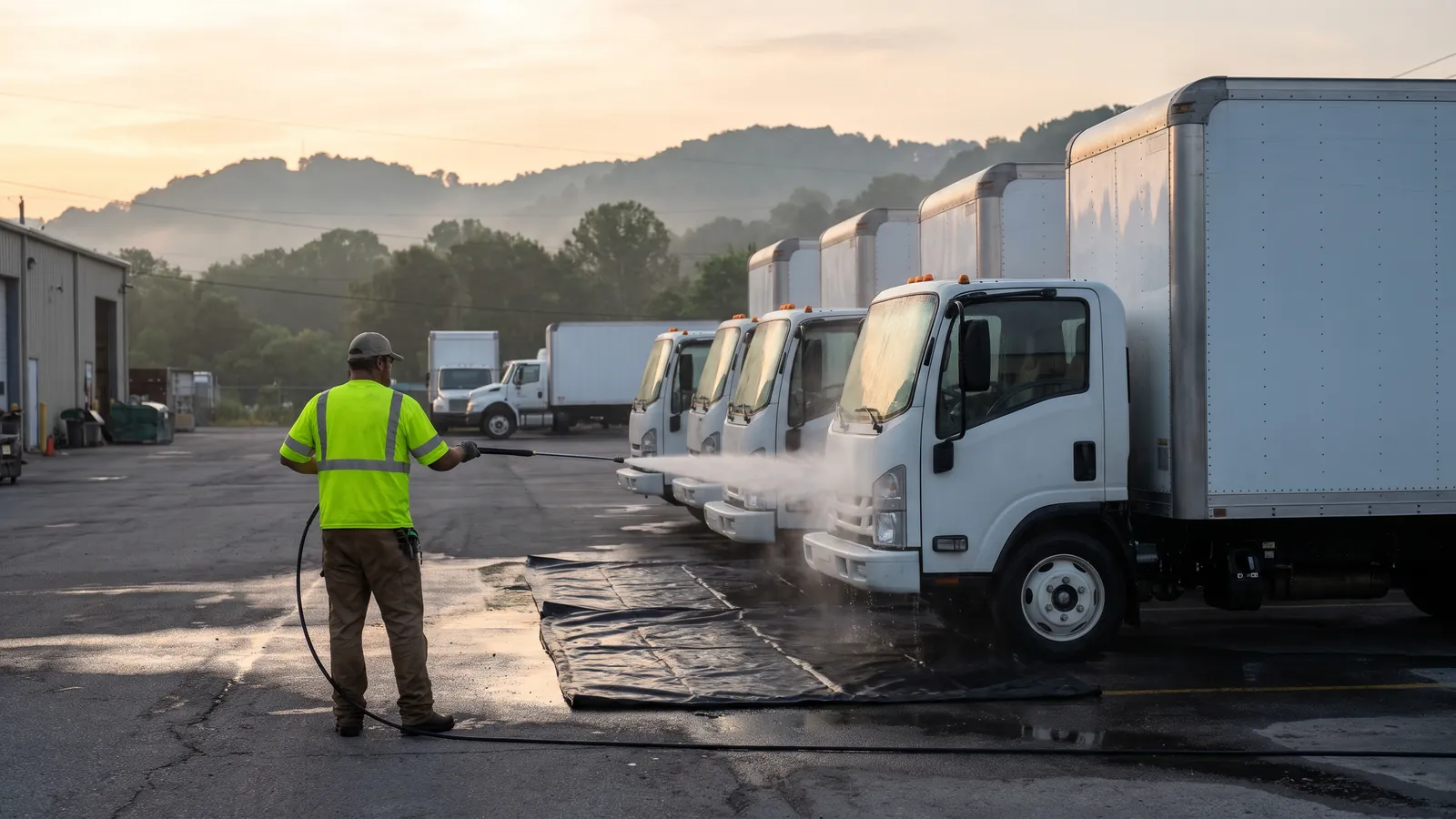
Box trucks, service vans, trailers and yellow iron washed where they park, so they're back to work the same day.
Why on-site
Taking ten trucks to a wash bay costs ten drivers' time. A mobile wash comes to the lot early, works down the line and is gone before the routes start, or comes on the day the equipment sits idle. It's common for HVAC and plumbing fleets, delivery vans, landscaping trailers and contractors' machines around Knox County.
What gets washed
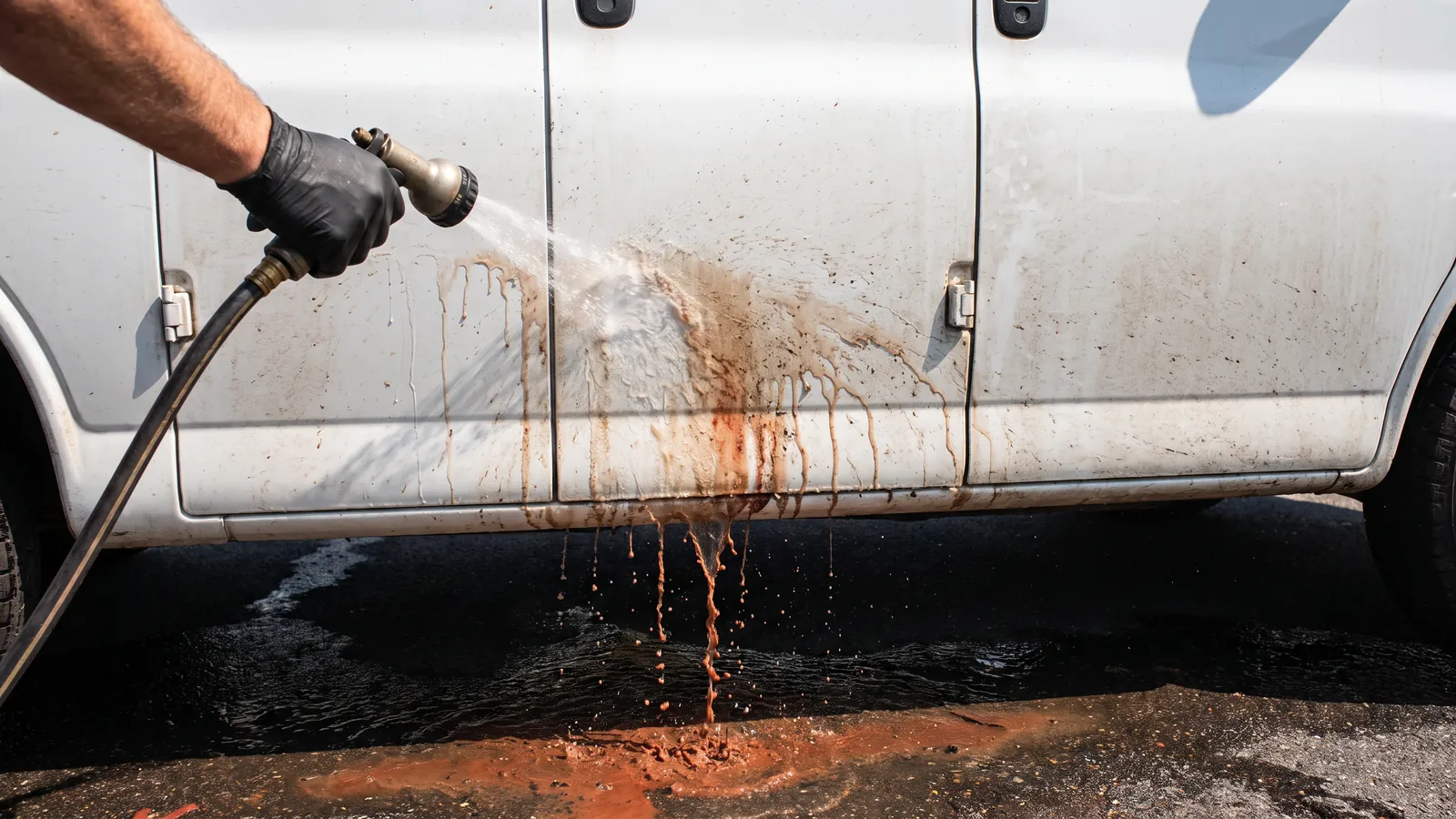
- Cab and box exteriors, wheels and wheel wells
- Trailers, including the deck and fenders
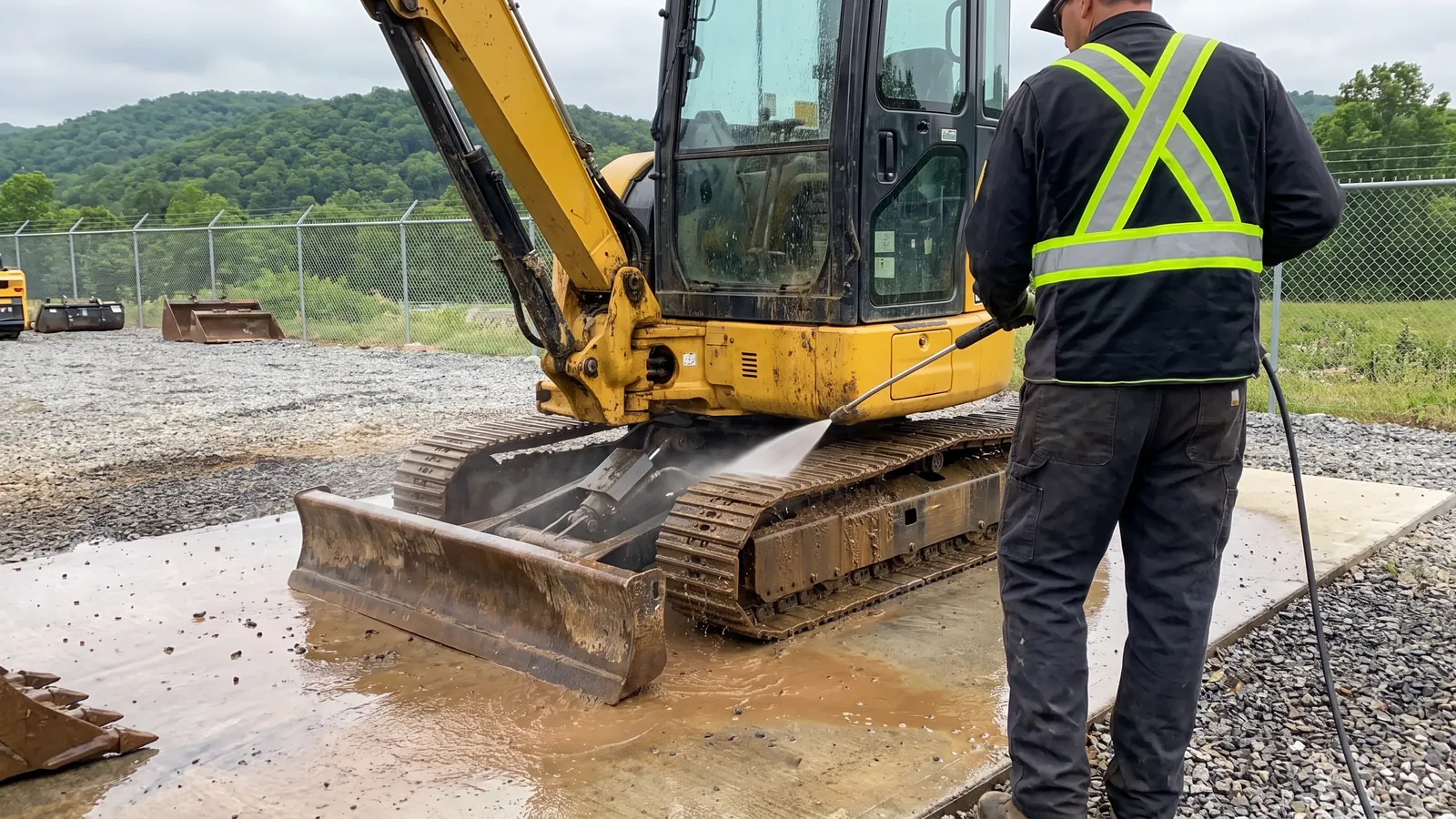
- Excavators, skid steers and mowers: mud off the tracks, decks and undercarriage
- Lettered and wrapped vehicles at lower pressure, kept away from wrap edges
Runoff from a truck wash
Vehicle wash water carries oil, brake dust and road grime, and it can't go into a storm drain in Knox County. Fleet jobs are set up over a reclaim mat or in an area that drains to a sanitary connection the property is allowed to use. If your lot doesn't have either, that's worked out before the first visit.
| How often | Typical fleet |
|---|---|
| Weekly | Delivery and food service vehicles |
| Every two weeks | Service vans that customers see every day |
| Monthly | Box trucks, trailers, most contractors |
| As needed | Equipment before a sale, a move or an inspection |
Asked about fleet washing
Still wondering about something? Call (865) 390-6589 and ask. It costs nothing to ask.
How many vehicles do you need for a fleet visit?
There's no fixed minimum, but on-site washing makes most sense from about three or four vehicles up. One truck is often cheaper at a wash bay.
Can you wash in winter?
On days above freezing, yes. Below freezing, the water ices on the lot and on the vehicles, so visits move to the next mild day.
Do you clean interiors?
No, exteriors only. Interior detailing is a different service.